01 / THE PREMISE
NEUROSCIENCE, WHERE LIFE HAPPENS
Before the decision,
there is a story.
Young people live with pressure long before anyone explains what that pressure may be doing to the brain.
Brains Under Pressure creates a space where neuroscience meets the lives Nigerian children and adolescents are already living—at home, at school, online and among friends.
Stress ✦Sleep ✦Memory ✦Attention ✦Emotion ✦Reward ✦Social connection ✦Peer influence ✦Family expectations ✦Social media ✦Bullying ✦Belonging ✦Difficult decisions ✦Substance exposure ✦Stress ✦Sleep ✦Memory ✦Attention ✦Emotion ✦Reward ✦Social connection ✦Peer influence ✦Family expectations ✦Social media ✦Bullying ✦Belonging ✦Difficult decisions ✦Substance exposure ✦
FROM IDEA TO READY-TO-PILOT
The tools are already
taking shape.
Brains Under Pressure is not beginning with a blank page. LiteraReach has already developed the initial NeuroStory learning model, a 12-card brain-health journey, facilitator-facing card architecture, community implementation pathways, and the Brains Under Pressure theatrical concept. Brain Awareness Week 2027 provides an opportunity to scientifically review, adapt, pilot, evaluate, and strengthen these assets with Nigerian children and adolescents.
 01 / 06
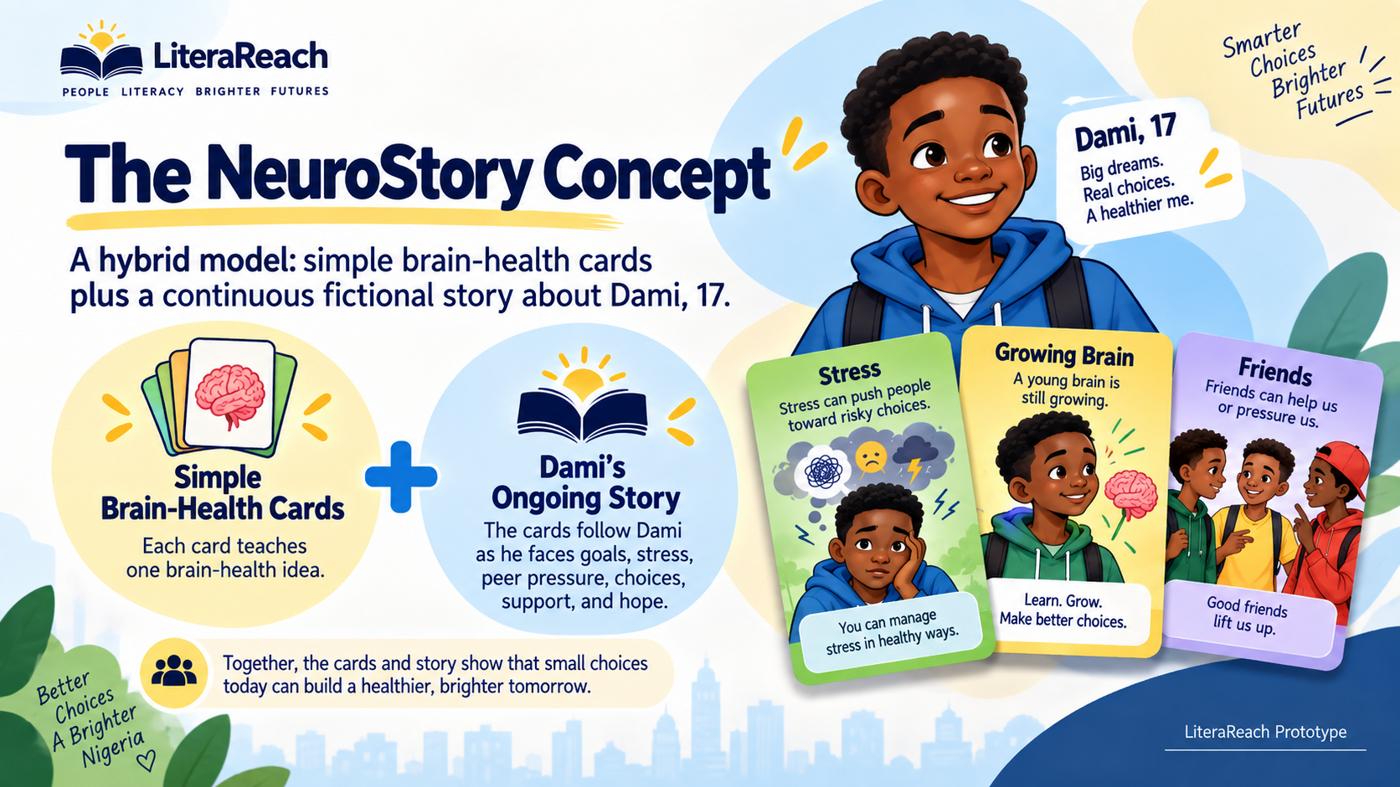
DEVELOPED ASSETNeuroStory Concept
THE NEUROSTORY CARD LAB
Meet NeuroStory
One brain-health idea at a time. One larger story across the journey.
NeuroStory combines simple brain-health learning cards with the continuing fictional story of Dami and other Nigerian young people navigating goals, friendships, stress, pressure, reward, substances, coping, help-seeking, and hope.
Hover, tap, or use Enter to turn each card
THE COMPLETE PROTOTYPE
A 12-Card
Learning Journey
Each card teaches one concept. Together, the cards create a story about the brain, choices, relationships, resilience, and possibility.
Growing Brain
→Feelings
→Stress
→Friends
→Reward
→Habits
→Substances and the Brain
→Pause
→Healthy Coping
→Ask for Help
→Hope and Recovery
→Prototype status: These educational materials are undergoing scientific review and pilot testing. They are not clinically validated tools.
THE BRAIN–STORY METHOD
Follow the story.
Find the possibility.
The learning tool and live experience share one pathway: start with a recognisable story, make pressure visible, then create room for reflection and change.
STORY
BRAIN
PRESSURE
CHOICE
REFLECTION
POSSIBILITY
What is happening biologically?
What is the young person carrying?
What is happening around them?
What is happening in the brain, within the person, and around the person?
THE FRAMEWORK
Three lenses.
One whole person.
Ọpọlọ | Brain
What is happening biologically?
ORÍ
02Orí | Self
What is the person carrying?
ÀYÍKÁ
03Àyíká | Environment
What is happening around them?
“What is happening in the brain, within the person, and around the person?”
THE BRAIN–STORY METHOD
Science you can
feel in the room.
LiteraReach connects evidence with expression. Young people do not just receive knowledge—they recognise it, question it and make it their own.
01Neuroscience
02Storytelling
03Reading
04Rhythm
05Visual expression
06Theatre
07Discussion
08Lived experience
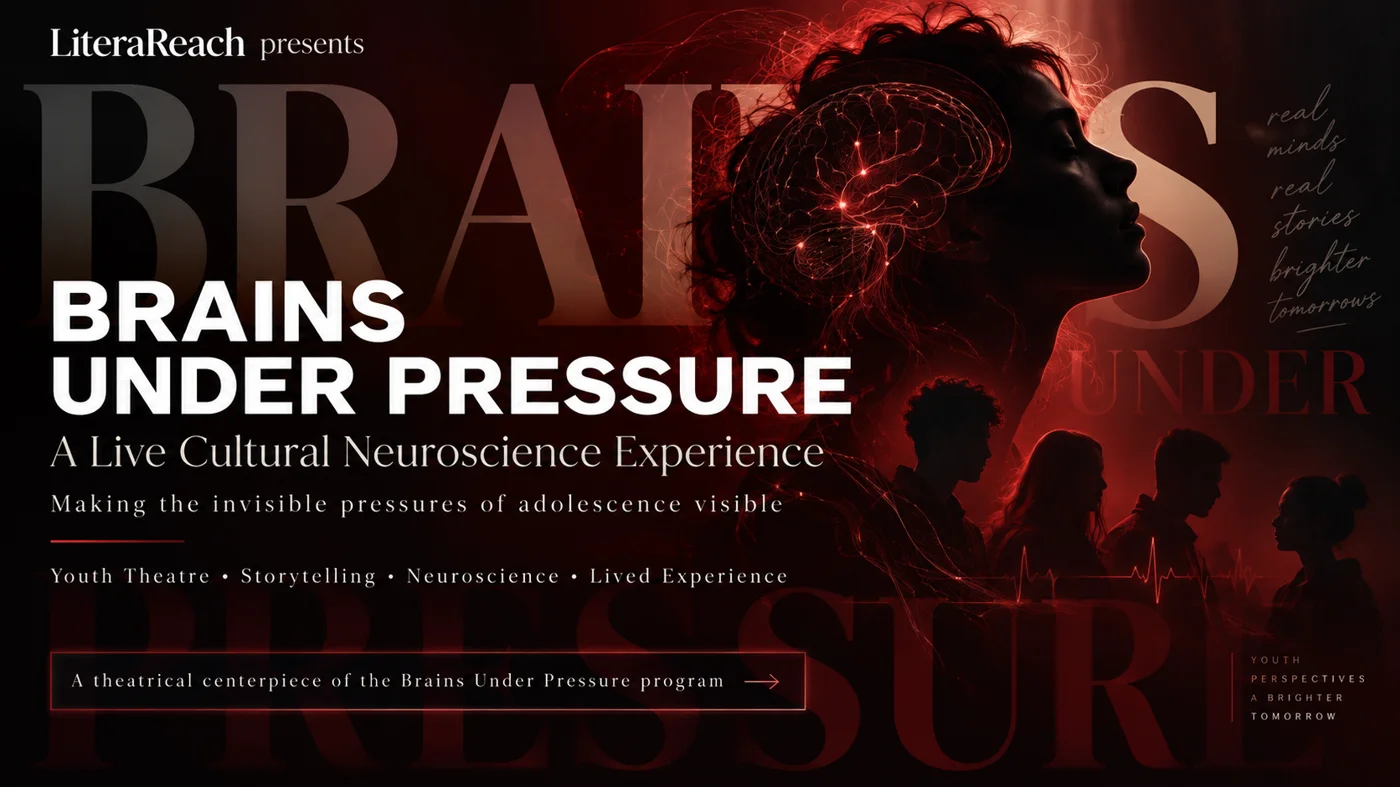
THE THEATRICAL CENTREPIECE
Brains Under
Pressure: Live
When neuroscience leaves the textbook and enters the story.
Participatory theatre places young people inside recognizable situations involving examination pressure, family expectations, friendship, bullying, social media, sleep deprivation, belonging, grief, substance exposure, and difficult choices.
Scenes pause at critical moments. Young people identify what may be happening in the brain, what the character is carrying, and what is happening in the environment around them. They then help rewrite the scene.
Making the invisible pressures of adolescence visible.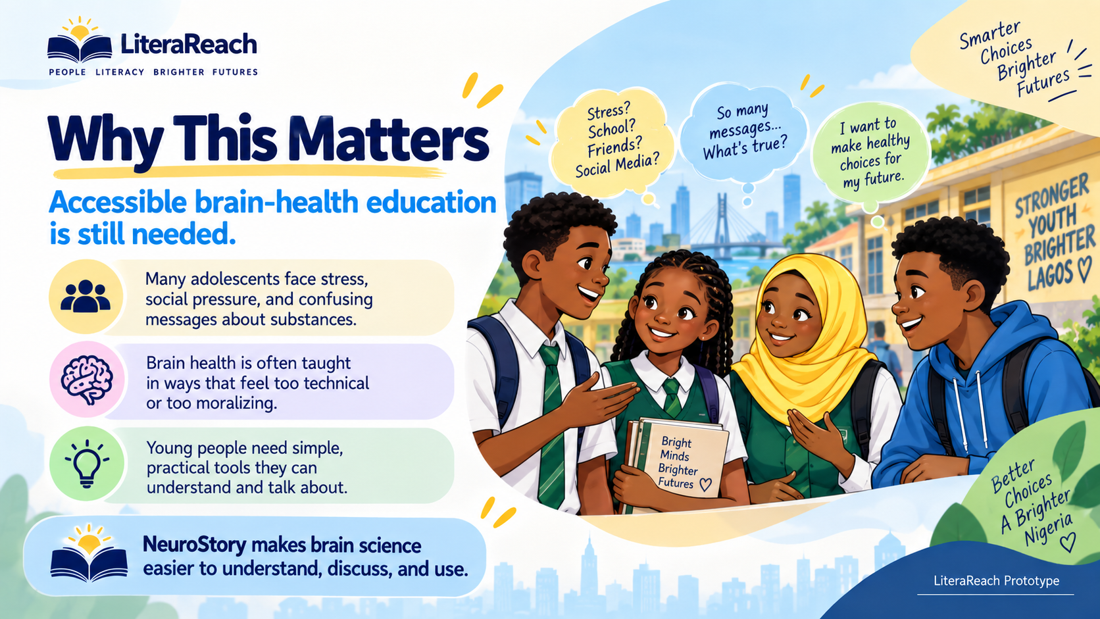
PLANNED IMPLEMENTATION PATHWAYS
How the tools
will be used.
These pathways describe responsible next steps for the prototype—not national deployment already completed.
Workshops
Structured participatory sessions.
Youth Ambassadors
Young people communicating brain-health knowledge to peers.
Schools
Supporting future neuroscience and health-literacy education.
Families & Community Groups
Creating conversations beyond the classroom.
Language Adaptation
English, Yoruba, Nigerian Pidgin, and locally meaningful examples.
WHAT SUPPORT MAKES POSSIBLE
The path from prototype
to community tool.
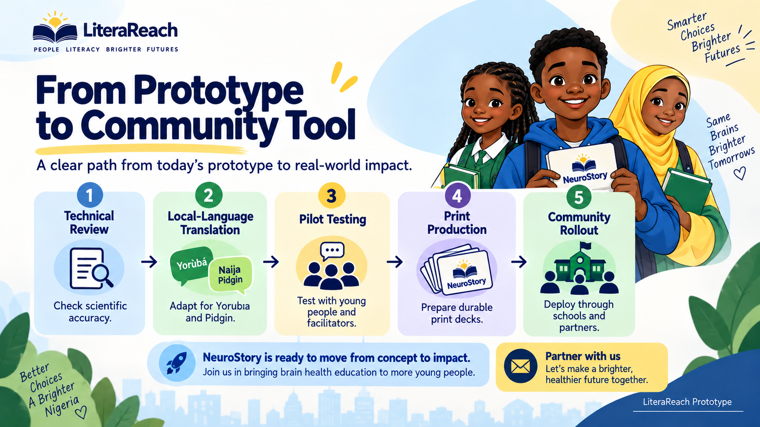
Scientific Review
Neuroscience content checked for accuracy.
Cultural & Language Adaptation
Adapt for Nigerian children, Yoruba-language contexts, Nigerian Pidgin, and different learning needs.
Pilot Testing
Test with children, adolescents, caregivers, facilitators, including participants with disabilities and out-of-school youth.
Refinement & Production
Improve materials using participant and expert feedback.
School, Informal-Learning & Community Pathway
Explore responsible use through school, informal-learning, and community settings, families, and policy partners.
BRAIN AWARENESS WEEK 2027
What this moment
will help us do.
With Brain Awareness Week 2027, Brains Under Pressure will move from prototype development into structured community engagement.
Engage
Approximately 60 core children and adolescents ages 10–19.
Include
School-enrolled youth, out-of-school young people, and participants with disabilities.
Translate
Turn neuroscience into stories, theatre, visual learning, and culturally meaningful conversation.
Learn
Assess changes in neuroscience knowledge, communication confidence, and participant experience.
≈100direct participants across the wider program experience
COMMUNITIESSomolu • Oshodi-Isolo • Mushin
WE ARE BUILDING WITH, NOT JUST FOR
“Young people should not only receive neuroscience knowledge. They should help us understand how it needs to be communicated.”
Youth feedback, stories, art, theatre, and reflections will shape future iterations of the NeuroStory materials and Brains Under Pressure experience.
AFRINYPE provides a future pathway for translating youth insight into practical policy conversation. This is an opportunity to inform recommendations—not a claim of curriculum adoption.
THE THREE-DAY EXPERIENCE
Learn it. Live it.
Give it language.
Each day moves young people from understanding the science to interpreting their world and communicating what they know.
The brain behind the story
UNDERSTAND
Brain, story, stress, memory, emotion
We begin with the biology, using familiar stories to make invisible processes visible.
The world around the choice
INTERPRET
Environment, reward, belonging, choice, theatre
Young people map pressure, context and consequence through participatory scenes.
Knowledge becomes culture
TRANSLATE
Storytelling, performance, art, science communication, showcase
Participants turn what they know into work their communities can see, hear and feel.
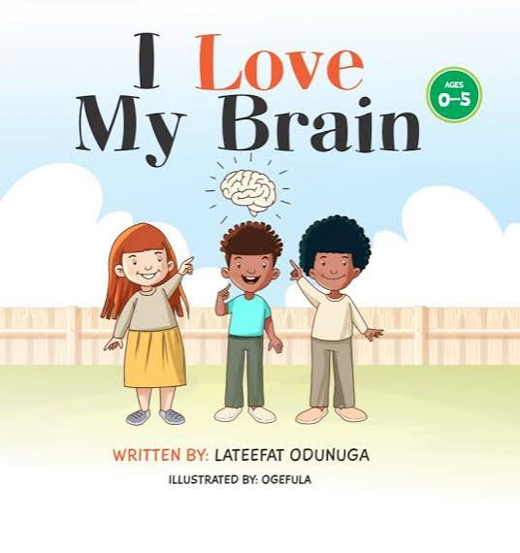
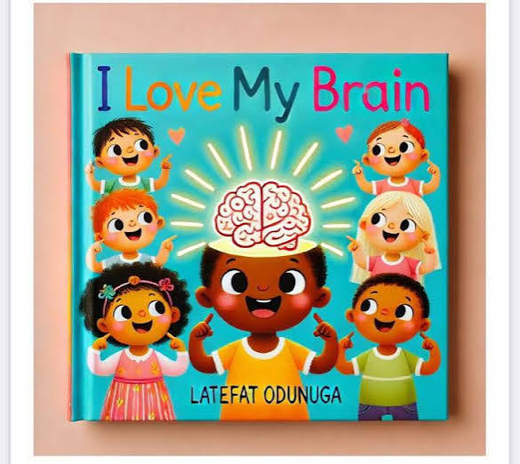
LITTLE BRAINS · AGES 0–6 + CAREGIVERS
Wonder starts
very early.
A joyful, age-sensitive introduction to the brain through I Love My Brain and Professor Lala Meets the Brain.
StorytellingMovementDrawingEarly brain literacy
WATCH & LEARN WITH PROFESSOR LALA
Meet the brain through story.
Continue the early brain-literacy journey with Professor Lala on YouTube.
Watch on YouTube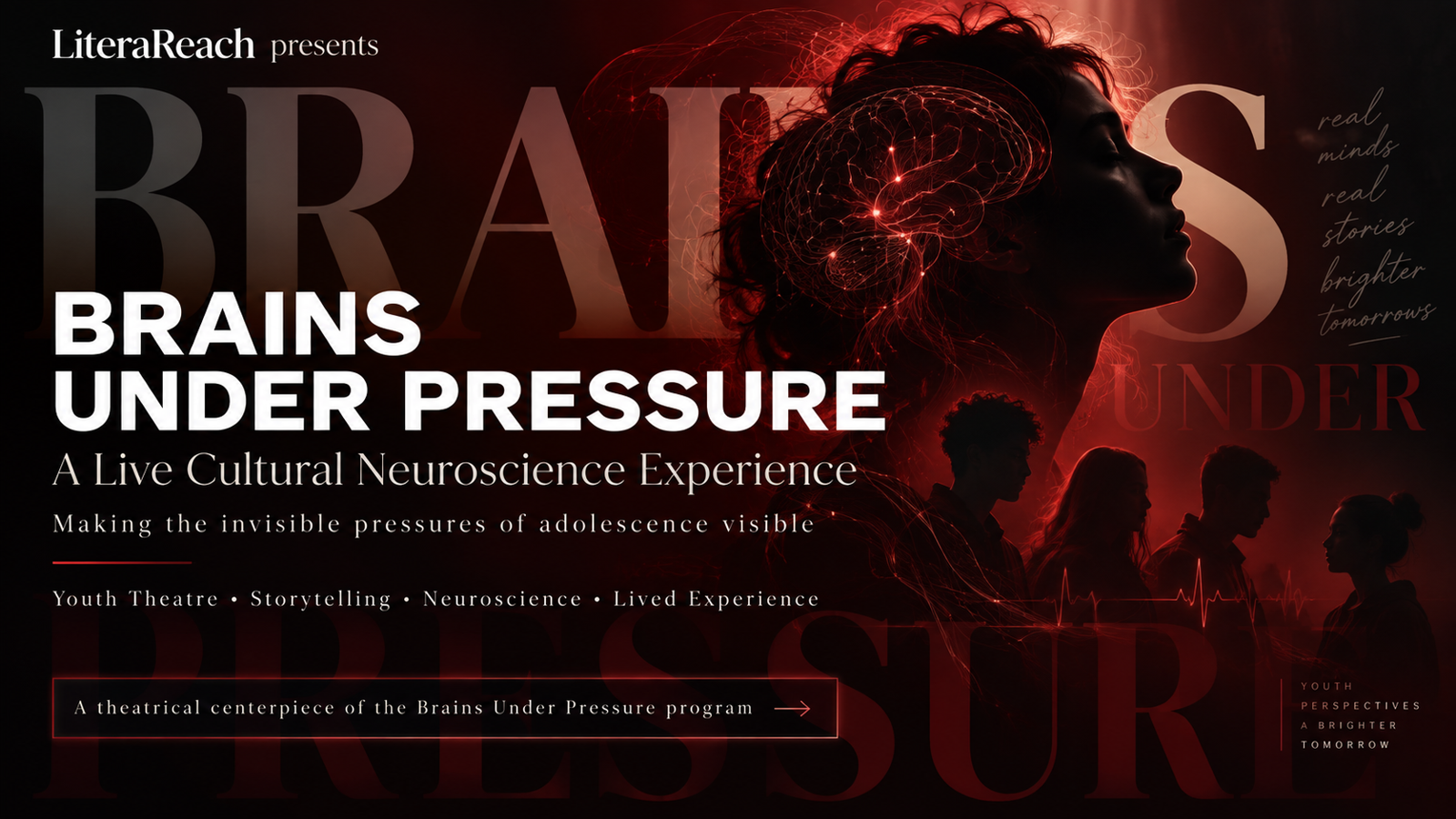
WHO GETS TO LEARN ABOUT THE BRAIN?
Brain health education should not depend on where, how, or whether a young person goes to school.
Brains Under Pressure will recruit young people ages 10–19 from Somolu, Oshodi-Isolo, and Mushin across formal schooling, informal learning environments, and out-of-school settings, with intentional inclusion of young people with disabilities. Community recruitment will help reach adolescents who may be missed when educational programs are delivered only through schools.
Formal Education
Children and adolescents enrolled in primary and secondary schools.
Informal Learning
Young people learning through community programs, apprenticeships, faith-based learning, vocational settings, and other non-formal environments.
Out-of-School Youth
Young people whose education may be interrupted, limited, or currently absent, including youth reached through neighborhoods, markets, transport hubs, and community networks.
Young People with Disabilities
Participants with physical, sensory, communication, and learning support needs, with multiple ways to engage and express what they learn.
Ọpọlọ. Orí. Àyíká.
Different lives. Different learning pathways.
One right to understand the brain.
Different routes into the room. Equal right to understand the brain.
Accessible venues
Visual and simplified materials
Flexible pacing
Sensory breaks
Supported communication
Caregiver/support-person participation where appropriate
Multiple ways to respond through speaking, reading, drawing, movement, theatre, and storytelling
Our goal is not simply to invite a diverse audience. It is to design neuroscience education so that school enrollment, disability, literacy level, income, or one preferred way of learning does not determine who gets access to it.
ROOTED IN LAGOS
Three communities.
Many lived realities.
Somolu•Oshodi-Isolo•Mushin
PREVIOUS EXPERIENCETAMASHA
A FOUNDATION TO BUILD FROM
Story has always been
part of the science.
TAMASHA, LiteraReach’s previous brain-health and storytelling initiative, demonstrated how culturally resonant narratives can open honest conversations about wellbeing.
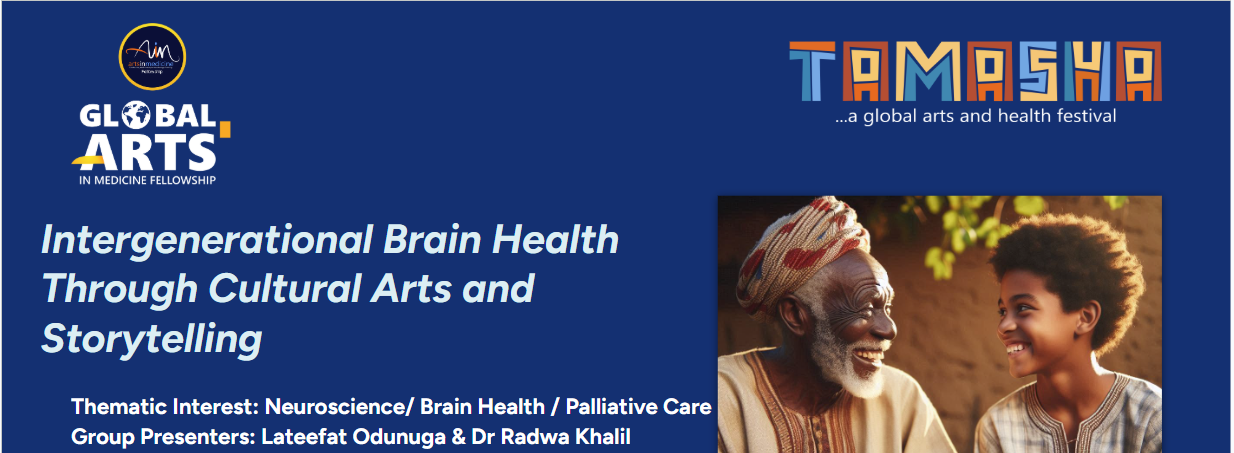
Intergenerational brain health through cultural arts and storytelling
PARTNERS & COLLABORATION
Built through
shared purpose.
Education, prevention, youth policy and cultural practice come together around one table.
 Lead organisation
 Collaborating organisation
 Youth policy partner
+Room for confirmed supporting institutions
FROM VOICE TO POLICY
A pathway for
youth perspective.
With AFRINYPE, what young people share, question and create will inform a Youth Brain Health Education Policy Brief—connecting lived experience to practical recommendations.
LISTENLEARNTRANSLATEINFORM
EXPRESSION OF INTEREST
Bring your story
into the room.
For young people, caregivers, educators, and partners across school, informal-learning, and community settings interested in participating or collaborating.
Lagos, NigeriaIn preparation for Brain Awareness Week 2027